
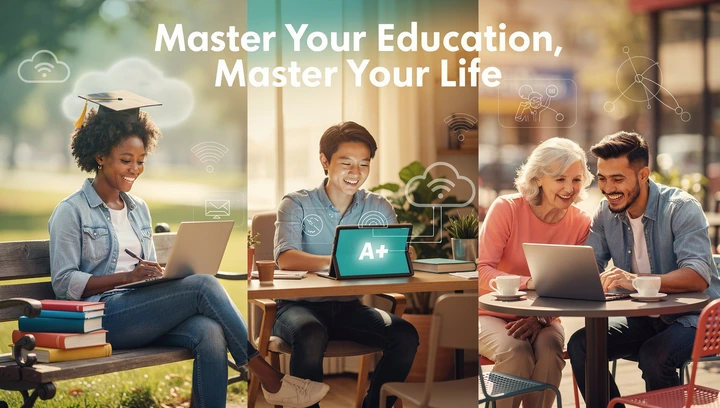
Ever wondered if you could become an even better teacher, perhaps a school leader, or even develop new teaching skills, all while staying comfortable at home? You’re not alone! Many dedicated educators are looking for ways to grow their careers without putting their lives on hold. That’s where an Online Master’s in Education comes in. Think of it as going back to school, but with the amazing flexibility of learning from your own space, on your own schedule.
This article is your friendly guide to understanding everything about getting a master’s degree in education online. We’ll explore what it is, why so many teachers are choosing this path, what you’ll learn, and how it can supercharge your teaching journey. We’ll also look at the different kinds of programs out there and help you figure out if this digital learning adventure is the perfect fit for you. Get ready to discover how an online master’s in education can open up a world of new possibilities!
Table of Contents
What Exactly is an Online Master’s in Education? 💻 Your Classroom, Anywhere!
An online master’s in education is essentially a graduate-level degree program designed specifically for educators, but delivered entirely or mostly over the internet. Instead of attending classes in a physical building at specific times, you’ll log in to a virtual learning platform. Here, you’ll find lectures, reading materials, assignments, and ways to chat with your professors and classmates. It’s like having a classroom right on your computer!
These programs are built for busy professionals – often teachers who are already working full-time. They offer incredible flexibility, allowing you to study when it works best for you, whether that’s late at night after the kids are asleep, on weekends, or during your planning period. This is a huge change from traditional master’s programs, which usually require you to be on campus at set times.
Many universities, both big and small, now offer a wide range of these online master’s programs. They understand that the world is changing, and learning needs to adapt, too. So, if you’re thinking about taking your education career to the next level, but worry about fitting more school into your already packed schedule, an online program might just be your golden ticket.
The Big Idea Behind Online Learning: Convenience Meets Quality ✨
The core idea behind online education, especially at the master’s level, is to provide access to high-quality learning without the geographical or time constraints of traditional schooling. Imagine wanting to get a degree from a top university that’s thousands of miles away. With an online program, that dream can become a reality!
It’s not just about convenience, though. These programs are carefully designed to deliver the same rigorous education and often the same curriculum as their on-campus counterparts. The goal is to ensure that when you graduate with an online master’s in education, you have the same knowledge, skills, and respected credential as someone who completed the program in a traditional classroom setting. Universities work hard to make sure their online degrees are just as valuable and recognized as their in-person ones.
Why Are Teachers Flocking to Online Master’s Programs? 💡 More Than Just Flexibility
There are many compelling reasons why an online master’s in education has become such a popular choice for teachers looking to advance their careers. It’s not just about learning in your pajamas (though that’s certainly a perk!). Let’s break down some of the biggest draws:
- Unmatched Flexibility: This is often the number one reason. Teachers have incredibly demanding schedules. Juggling grading, lesson planning, extracurricular activities, and a personal life leaves little room for fixed evening classes. Online programs allow you to study at your own pace and time, fitting your coursework around your existing commitments.
- Career Advancement Potential: A master’s degree can open doors to new roles like school administration, curriculum development, instructional coaching, or even teaching at the college level. It can also lead to higher pay scales in many school districts.
- Specialization in Your Passion: Online programs offer a vast array of specializations. Want to become an expert in educational technology? Or special education? Or perhaps lead a department? An online master’s allows you to hone in on a specific area of education that truly excites you and aligns with your career goals.
- Accessibility to Top Programs: You’re no longer limited to universities in your local area. An online format means you can enroll in programs offered by prestigious universities across the country, or even the world, without needing to relocate.
- Cost-Effectiveness (Sometimes): While tuition can be similar to on-campus programs, online students often save on expenses like commuting, parking, and sometimes even textbooks if digital versions are provided.
- Developing Digital Literacy: By engaging in online learning, you naturally enhance your own digital skills and comfort with various learning technologies. This experience can be directly applied back in your own classroom, making you a more tech-savvy educator.
- Continuous Professional Growth: Education is constantly evolving. A master’s degree allows you to stay current with the latest research, teaching methodologies, and educational policies, ensuring you remain an effective and innovative educator.
Juggling Life and Learning: The Power of Asynchronous vs. Synchronous Classes ⚖️
When you explore online master’s in education programs, you’ll often hear terms like “asynchronous” and “synchronous” learning. Knowing the difference is key to understanding the flexibility you’ll get:
- Asynchronous Learning: This is the most flexible option. Think of it as learning on demand. Your professors will post lectures, reading materials, and assignments, and you complete them within a given timeframe (usually a week or two), but whenever it works for you. You might participate in online discussion forums, submit papers, or watch pre-recorded videos. There are no set “class times.”
- Synchronous Learning: This is closer to a traditional classroom experience, but online. You’ll have live virtual meetings (like video calls) at specific times with your professor and classmates. This allows for real-time discussions, Q&A sessions, and group work. While less flexible than asynchronous, it can offer a stronger sense of community and immediate feedback.
Many programs blend both approaches, offering a mix of pre-recorded content and occasional live sessions. It’s important to check the program details to see which style suits your learning preferences and schedule best.
What Can You Study? 🗺️ A Map of Educational Specializations
One of the most exciting aspects of pursuing an online master’s in education is the sheer variety of specializations available. It’s not just “getting a master’s in teaching” anymore! These programs allow you to become an expert in a specific area, aligning your advanced degree with your career aspirations.
Here’s a look at some popular specializations you might encounter:
- Curriculum & Instruction: This is a broad but highly impactful field. You’ll learn how to design, develop, and evaluate educational programs and teaching materials. Graduates often become curriculum coordinators, instructional designers, or master teachers.
- Educational Leadership & Administration: If you dream of leading a school, a department, or a district, this is for you. You’ll study school law, finance, human resources, and strategic planning. This path often prepares you for roles like principal, assistant principal, or superintendent.
- Special Education: This specialization focuses on teaching students with diverse learning needs and disabilities. You’ll learn about different conditions, individualized education plans (IEPs), and specialized teaching strategies.
- Educational Technology (EdTech): In today’s digital world, understanding how technology can enhance learning is crucial. This program explores tools, software, and strategies for integrating technology effectively into the classroom and beyond.
- Reading & Literacy: Become an expert in how children and adults learn to read and write. You’ll study reading difficulties, intervention strategies, and literacy program development. Many graduates become reading specialists or literacy coaches.
- Early Childhood Education: Focus on the unique developmental needs and best teaching practices for young children, typically from birth through age eight.
- Higher Education Administration: If your sights are set beyond K-12, this program prepares you for leadership roles in colleges and universities.
- School Counseling: While often requiring specific fieldwork, some online programs offer the coursework for becoming a school counselor, helping students with academic, social, and emotional development.
- Teaching English to Speakers of Other Languages (TESOL): Learn specialized techniques for teaching English to non-native speakers, both in the US and abroad.
This is just a snapshot! Many universities also offer niche specializations in areas like gifted education, bilingual education, STEM education, and more. When choosing a program, think about your long-term career goals and what kind of impact you want to make in the world of education.
Picking Your Path: What to Consider for Your Online Master’s 🧐
With so many choices, how do you decide which online master’s in education program is right for you? It’s a big decision, so take your time and think about these important factors:
- Your Career Goals: What do you want to do after you get your master’s? Do you want to stay in the classroom, move into administration, become a specialist, or work outside of traditional schools? Your goals should guide your specialization choice.
- Program Accreditation: This is super important! Make sure the university and the specific program are accredited by a recognized agency. Accreditation means the program meets certain quality standards and that your degree will be respected by employers.
- Faculty Expertise: Look at the professors who teach in the program. Do they have strong backgrounds in the field you’re interested in? Are they active researchers or experienced practitioners?
- Course Structure and Content: Review the course catalog. Do the courses sound interesting and relevant to your goals? Is there a good balance of theory and practical application?
- Technology Requirements & Support: Are you comfortable with the learning platform? Does the university offer good technical support if you run into issues?
- Student Support Services: What kind of support do online students receive? This could include academic advising, career services, library access, and mental health resources.
- Cost and Financial Aid: Tuition fees can vary significantly. Explore scholarships, grants, and federal student aid options. Don’t forget to factor in other costs like books and materials.
- Program Length and Pace: Do you want to finish quickly (accelerated) or take your time (part-time)? Programs can range from 12-18 months for full-time to 2-5 years for part-time.
Choosing the right program is a personal journey. Take your time, do your research, and don’t be afraid to reach out to admissions counselors with your questions!
The Online Learning Experience: What’s it Really Like? 🧑💻 Inside Your Digital Classroom
Stepping into an online master’s in education program is a unique experience that’s different from both traditional on-campus learning and even your own experiences teaching online. It’s a structured academic environment designed for adult learners.
Here’s a peek at what you can generally expect:
- Learning Management Systems (LMS): This is your central hub. Popular LMS platforms include Canvas, Blackboard, Moodle, and Brightspace. You’ll log in to access course syllabi, lectures (often recorded videos or detailed text modules), readings, assignments, discussion boards, and grades.
- Lectures & Readings: Instead of sitting in a lecture hall, you’ll engage with content digitally. This might mean watching pre-recorded video lectures, listening to audio podcasts from your professor, or reading extensive digital texts and articles.
- Assignments & Projects: Just like traditional programs, you’ll have essays, research papers, presentations (often recorded), case studies, and group projects. Some programs might include capstone projects or portfolios that demonstrate your cumulative learning.
- Discussion Forums: These are the heart of many asynchronous online courses. You’ll post your thoughts on readings or lecture topics, respond to your classmates’ posts, and engage in meaningful academic dialogue. This is where a lot of the collaborative learning happens.
- Virtual Meetings & Webinars: For synchronous elements or occasional guest speakers, you might use video conferencing tools like Zoom, Google Meet, or Microsoft Teams.
- Feedback & Grading: Professors provide feedback on assignments and participate in discussions, just as they would in a physical classroom. Grades are typically posted within the LMS.
- Digital Libraries & Resources: Universities provide extensive online library databases, journals, and research tools that you can access from anywhere.
- Collaborative Tools: You might use shared documents (like Google Docs), wikis, or other online tools to work with classmates on group assignments.
The key to success in an online environment is self-discipline and good time management. While flexible, it requires you to be proactive in managing your workload and staying engaged.
Building Connections: Does Online Mean Alone? 🤝 Not at All!
One common concern about online master’s in education programs is whether you’ll feel isolated. The good news is that reputable programs are specifically designed to foster interaction and community among students and faculty.
Here’s how connections are built in the digital space:
- Active Discussion Boards: These aren’t just for turning in assignments; they’re platforms for lively debates, sharing ideas, and learning from your peers’ diverse experiences.
- Group Projects: Working collaboratively on projects with classmates, even remotely, helps you build relationships and learn teamwork in a digital context.
- Virtual Office Hours: Professors often hold virtual office hours using video conferencing, allowing you to get one-on-one time to ask questions and discuss coursework.
- Student Support Forums: Many programs have dedicated forums for students to chat, ask questions about technology, or simply connect outside of formal class discussions.
- Social Media Groups: Sometimes students create their own informal social media groups to support each other throughout the program.
- Networking Opportunities: Many universities host virtual networking events or provide platforms for alumni to connect, which can be invaluable for career development.
While the interactions might be different from casual chats in a hallway, they can be just as meaningful and build a strong sense of community. The shared experience of balancing a demanding job with advanced studies often creates strong bonds among online learners.
Comparing Online vs. Traditional Master’s Programs in Education 📊 Which Path is Right for You?
When considering an online master’s in education, it’s helpful to compare it directly with the traditional, on-campus experience. Both have their strengths, and the best choice depends on your personal circumstances, learning style, and career goals.
Here’s a comparison table to help you weigh the options:
| Feature | Online Master’s in Education | Traditional Master’s in Education (On-Campus) |
| Location | Anywhere with internet access (home, coffee shop, library) | Specific university campus |
| Schedule | Highly flexible (often asynchronous), self-paced study | Fixed class times, requires physical attendance |
| Learning Style | Independent, self-motivated, strong time management skills needed | Structured, direct interaction, may suit hands-on learners |
| Interaction | Discussion forums, virtual meetings, email, group projects | Face-to-face discussions, informal campus interactions |
| Networking | Online forums, virtual events, professional groups | Campus events, direct faculty mentorship, local connections |
| Commute/Travel | None | Daily commute, potential relocation |
| Cost Implications | Saves on commute/housing; tuition often similar | Costs for commute, parking, sometimes higher living expenses |
| Accessibility | Wider choice of programs regardless of location | Limited to programs within commuting distance or relocation |
| Digital Skills | Naturally enhances tech literacy | May involve less direct tech skill development in coursework |
| Pacing | Can often be accelerated or stretched out to fit life | Generally follows a more rigid academic calendar |
| Degree Recognition | Generally equal to on-campus, if from accredited institution | Widely recognized and established |
The Verdict: It’s About Fit, Not Superiority 🤔
Neither online nor traditional master’s programs are inherently “better.” They are simply different modalities designed to serve different needs.
- Choose Online If: You need maximum flexibility, you’re a self-starter, you have a demanding job or family commitments, you want access to programs not available locally, or you prefer learning at your own pace.
- Choose Traditional If: You thrive on in-person interaction, you prefer a highly structured schedule, you want the full “campus experience,” or you have the time and ability to attend classes physically.
Ultimately, the goal is to get a quality education that helps you achieve your career aspirations. Research both options thoroughly and consider what kind of learning environment will set you up for success.
The Financial Side: Investing in Your Education 💰 Costs and Aid for Online Masters
Pursuing an online master’s in education is an investment in your future. Like any advanced degree, there are costs involved, but also many ways to make it affordable. Understanding the financial landscape is crucial before you commit.
What Does an Online Master’s in Education Cost? 💸
The cost of an online master’s program can vary widely based on several factors:
- University Type: Public universities often have lower tuition rates than private institutions.
- Residency: Many public universities offer different tuition rates for in-state vs. out-of-state students, even for online programs. However, some online programs offer a single tuition rate for all students, regardless of residency.
- Program Length: Shorter, accelerated programs might have a higher per-credit cost but a lower overall total due to fewer credits.
- Specialization: Highly specialized programs might have different fee structures.
- Fees: Beyond tuition, there are often technology fees, administrative fees, and other charges. Be sure to ask for a full breakdown of all costs.
On average, you can expect the total tuition for an online master’s in education program to range from $15,000 to $40,000 or more. Some elite private universities might exceed this range. It’s vital to check the specific program’s website for their current tuition and fee schedule. For example, the University of Illinois Urbana-Champaign’s online M.Ed. in Curriculum & Instruction program provides detailed information on its costs. You can explore their official page for more insights here: University of Illinois Urbana-Champaign Online M.Ed. Costs.
Finding Financial Help: Making Your Master’s Accessible 🤝
Don’t let the sticker price scare you! Many avenues are available to help you finance your online master’s in education:
- Federal Student Aid:
- Federal Student Loans: These are often the most common form of aid for graduate students. You’ll typically need to complete the Free Application for Federal Student Aid (FAFSA) to be eligible.
- Graduate PLUS Loans: Another federal loan option for graduate students that can cover up to the cost of attendance minus other financial aid.
- University Scholarships and Grants: Many universities offer specific scholarships or grants for students pursuing master’s degrees, sometimes even specifically for online learners or educators. Check with the financial aid office and your chosen department.
- Employer Tuition Reimbursement: If you’re a working teacher, your school district or employer might offer tuition reimbursement programs as a benefit. This is a fantastic way to offset costs, so always check with your HR department!
- Private Scholarships: Numerous organizations and foundations offer scholarships based on academic merit, field of study, background, or specific needs. Websites like Fastweb or Scholarship.com can be great resources.
- Payment Plans: Universities often allow you to pay tuition in installments rather than one lump sum, which can make budgeting easier.
- Military Benefits: If you are a veteran or active service member, explore benefits like the GI Bill, which can significantly cover educational expenses.
- Teaching Assistantships/Fellowships: While less common for purely online programs, some hybrid programs or those requiring some on-campus presence might offer these.
Key Tip: Always contact the financial aid office of the universities you’re interested in. They are the experts and can provide the most accurate and up-to-date information on costs and available aid for their specific online master’s in education programs.
Accreditation: The Golden Seal of Quality for Your Degree 🏅 Why It Matters
When you’re searching for an online master’s in education program, one word you’ll hear a lot is “accreditation.” This isn’t just a fancy word; it’s incredibly important. Think of accreditation as a seal of approval that tells you a university and its programs meet high standards of quality.
What Does Accreditation Mean for Your Master’s? 📜
Accreditation means that an independent, recognized agency has thoroughly reviewed a college or university (and often its specific programs) and confirmed that it provides a good education. It’s like a quality check for schools!
There are two main types of accreditation to look for:
- Institutional Accreditation (Regional Accreditation): This is the most important type. It applies to the entire university and is granted by one of six regional accrediting bodies in the United States. If a university is regionally accredited, it generally means that:
- Your degree will be recognized and respected by other universities if you want to pursue further education (like a doctorate).
- Employers will value your degree.
- You’ll be eligible for federal student aid.
- Your credits will typically transfer more easily between regionally accredited institutions.
- Programmatic Accreditation: This applies to specific programs or departments within a university. For education programs, a key programmatic accreditor is the Council for the Accreditation of Educator Preparation (CAEP). If your online master’s in education program is CAEP-accredited, it means it meets rigorous standards specifically for preparing educators. This is especially important if you plan to pursue teacher licensure or certification in a particular state.
Why You MUST Check for Accreditation ✅
- Job Eligibility: Many school districts, especially public ones, will only hire teachers or administrators who hold degrees from accredited institutions.
- Licensure/Certification: If your goal is to get or renew a teaching license, most state departments of education require your degree to come from an accredited program. CAEP accreditation is often a key requirement.
- Further Education: If you ever decide to pursue a Ph.D. or another advanced degree, credits and degrees from unaccredited institutions are usually not accepted.
- Financial Aid: You cannot get federal student aid (like federal loans) to attend a college or program that is not accredited by a recognized agency.
- Quality Assurance: Accreditation means the program has been reviewed for its curriculum, faculty qualifications, student support, and overall effectiveness. It gives you confidence that you’re getting a valuable education.
Always verify! Don’t just take a school’s word for it. You can check the accreditation status of any institution or program on the websites of the accrediting agencies themselves, or through the database provided by the Council for Higher Education Accreditation (CHEA). Making sure your online master’s in education comes from an accredited source is one of the most important steps you can take.
The Future of Teaching: How an Online Master’s Elevates Your Impact 🚀
An online master’s in education isn’t just a piece of paper; it’s a powerful tool that can dramatically change your professional trajectory and the impact you have on students and schools. The skills, knowledge, and perspectives you gain will prepare you for the evolving challenges and opportunities in the field of education.
Beyond the Classroom: New Horizons for Educators 🌄
With an advanced degree, especially one focused on a specialization, your career options expand significantly. You might move from being a classroom teacher to:
- Instructional Coordinator/Coach: Helping other teachers improve their methods and integrating new curricula.
- Curriculum Developer: Designing the very learning materials and programs that students across a district use.
- School Administrator: Leading a school as a principal or assistant principal, shaping the overall learning environment.
- Special Education Director: Overseeing programs for students with diverse needs, ensuring equitable access to education.
- Educational Technologist: Guiding schools in implementing new technologies and digital learning strategies.
- Policy Analyst: Working for educational organizations or government agencies to influence educational policy.
- College Instructor: Teaching future educators at the university level.
- Corporate Trainer: Applying your pedagogical skills to develop training programs in the business world.
- Independent Consultant: Advising schools or educational companies on best practices.
The beauty of an online master’s is that it often allows you to pursue these advancements without leaving your current role, meaning you gain experience and continue to earn while you learn.
Leading the Charge in Educational Innovation 🌟
The world of education is constantly adapting to new research, technologies, and societal needs. An online master’s in education equips you to be at the forefront of these changes. You’ll learn about:
- Innovative Pedagogies: New ways of teaching and engaging students, such as project-based learning, blended learning, and personalized instruction.
- Data-Driven Decision Making: How to use student data to inform teaching practices and improve outcomes.
- Equity and Inclusion: Strategies to create more equitable and inclusive learning environments for all students, regardless of background or ability.
- Digital Tools and Resources: Leveraging technology not just for online learning, but also to enhance in-person classroom experiences.
- Leadership and Change Management: Skills to lead successful initiatives and foster positive change within your school or district.
You won’t just be reacting to changes; you’ll be prepared to drive them, bringing fresh ideas and evidence-based practices to your educational setting. This makes you an invaluable asset to any school or organization.
Ready to Take the Leap? Your Next Steps 👣
Deciding to pursue an online master’s in education is a significant step, but it’s one that can truly transform your career and amplify your impact as an educator. By now, you understand the flexibility, the diverse specializations, the online learning experience, the importance of accreditation, and the exciting career doors it can open.
A Quick Recap: Why an Online Master’s Might Be Your Best Move ✨
- Flexibility is King: Learn on your schedule, from your location.
- Career Growth: Open doors to leadership roles, specializations, and higher pay.
- Diverse Learning: Choose from many fields like Educational Leadership, Special Education, or EdTech.
- Quality Education: Reputable, accredited programs offer the same rigor as on-campus degrees.
- Supportive Community: Online learning doesn’t mean learning alone; interaction is built-in.
- Financial Options: Many avenues for aid and reimbursement exist.
- Future-Proof Your Career: Gain skills to lead innovation in a changing educational world.
If you’re a dedicated educator eager to deepen your knowledge, expand your influence, and stay current with the best practices in teaching and learning, an online master’s in education offers a practical and powerful pathway forward. It’s about empowering yourself to become the kind of educational leader and innovator that truly makes a difference.
So, are you ready to explore the possibilities and take that next exciting step in your teaching journey? The world of online education is waiting!